Thursday, May 22, 2008

You know you're living in a hostel when...

What's the difference between a hostel and a hotel? There doesn't seem to be a precise distinction, but over the course of our travels we've encountered some pretty clear signs that we're staying in a (cheap) hostel...

1. You're happy to receive a towel, but a little less happy when you realize your "towel" is a bathmat, i.e., a place to dry your feet

2. There's not a single electrical outlet in your room

3. Shelves are held in place with a string

4. Even when all doors and windows are closed, bugs (and we mean large ones) have a clear, direct path into your room

5. Any curtains are sheer, ill-fitted to your window and held up with a string and nail crudely smashed into your crumbling wall

6. Your "shower" is simply a shower head thrown on any old wall in your bathroom - doors or curtains are unnecessary, just be sure to remove all paper products before turning on the water

7. Your toilet lacks a seat

8. Your door is secured by a flimsy padlock that an eight-year old could pick with a paper clip

9. You're woken up by roosters, pigs, construction, your neighbor's clock radio, or all of the above

10. You're bloated, you've got diarrhea and the shared bathroom is separated from the hall and other bedrooms by a sliding door and semi-wall that you can see over

11. You wear flip-flops in your tepid to cold shower

12. Your "fitted" sheet will not stay fitted to your bed for even five minutes

13. You lift a shabby and oddly placed curtain in the center of a wall to find... "oh, hello neighbor!"

14. You can't identify the stuffing of your homemade pillow... rubber? styrofoam? old clothes?

15. You reserve in advance only to find upon arrival the place is totally full except for a make- shift room detached from the rest of the building

16. A cheerful greeting is posted on your room's door, including helpful reminders like: "After you have occupied the room for 15 minutes, you may not have your money back"

Actually, the truth is that there is a huge variety of what kind of accommodation a couple can get for $10 or $15 per night. We've had a spic and span room with a hot shower and television, and we've also had places like those pictured above.

To be sure, though, the absolute top of the line only came when Mama and Papa Boyd were in town... Imagine our delight when we were treated to something more like this:

Monday, March 24, 2008

An agnostic on religion

This blog post from Aaron was sitting unfinished for a while... it starts back at Easter...

We spent Easter in Ayacucho, Peru. The city's Semana Santa (Holy Week) celebration is the grandest in a very Catholic nation. The festivities last for over a week, beginning the friday before Palm Sunday, and continuing through Easter. We arrived in the city on Wednesday and started visiting the city's many cathedrals. On Good Friday, we watched, in elbow-to-elbow packed streets, a procession of hundreds of candle bearers made up of soldiers, city officials and religious leaders. A toddler on her dad's shoulders watched with us as the procession's centerpiece, a life size, bloody, Jesus statue lying in a glass coffin, was carried past while somber brass and drums played. The next day, Saturday, was a surprise - there was a small running of the bulls accompanied by drinking that lasted through the day and night. I heard one explanation that this is because God can not see you between crucifixion and resurrection... hmmm... That night, about twenty very homemade looking towers of fireworks, three stories tall and complete with hacked together pin-wheels, rockets and flying saucers, took turns showing their stuff and lighting up the main plaza. Sunday at 5am, in celebration of the resurrection, a sunrise procession carried a massive pyramidal structure, covered by thousands of candles and topped with a statue of a risen Jesus, around the central plaza while more fireworks exploded. (Ayacucho photos here: http://picasaweb.google.com/aaronboydyo/2008320323Ayacucho)

To put it simply, Holy Week in Ayacucho makes you think about religion, whether you're a worshiping believer, or, like me, an agnostic looking in, wondering what it all means.

One thing I'm pretty sure of is that there is a huge deal of misconception between people of different faiths, and certainly between believers and non-believers. Obama's speech on race a couple months ago opened an important conversation about some divisive misconceptions. Kristof of the New York Times wrote a great follow up article with the stark observation that "Much of the time, blacks have a pretty good sense of what whites think, but whites are oblivious to common black perspectives."

I think Kristof is spot on. Can similar statements be made regarding faith? Do non-believers know what believers think, and vice versa? I don't think so, though in this case the ignorance may run equally in both directions.

Here's a pretty scary statistic from a 2003 Kristof article (yeah, I like Kristof): "Americans believe, 58 percent to 40 percent, that it is necessary to believe in God to be moral. In contrast, other developed countries overwhelmingly believe that it is not necessary. In France, only 13 percent agree with the U.S. view. "

About 10 years ago I was sitting at dinner with a good friend and his family, all of whom were practicing Catholics. Somehow my own agnosticism came up, and I was asked by the mother if "I felt a hole in my life because I did not believe in God?" The question caused discomfort for most of the table. It was a terrific question for its honesty, sincerity and concern, and it demonstrated, particularly in the table-side squirming, a huge communication gap.

Being an agnostic and an engineer and having studied science, I have had many discussions about religion with non-believers. Also, I have heard the impossibility of God's existence preached with all the furor of a Jeremiah Wright church sermon. If you turn off the sound, riled up non-believers rationalizing atheism might appear just like righteous believers denouncing heathens, though I think the former smirk a bit more and the latter get redder in the face. More common than atheist rant, though, is the misconception that people who do not believe in God are more rational than those who do. It's an error that mirrors the ignorance that believers own morality.

Before spending time in South America, before meeting so many Catholic faithful, before seeing the charity, before reading the history, my strongest images of the Catholic church were its scandalous priests and the apparent hypocrisy of its centuries of wealth. I suspect (trying to find an excuse for my ignorance) this is because news loves a scandal and because the church's wealth is an easy target for non Catholics. Letting those images define the Catholic church is like letting the worst of U.S. leaders and businessmen, e.g. multinational oil barons, define us and the American Dream. I suppose every institution, religious or secular, has its extremists who pervert an otherwise good thing.
Recently, Melissa and I visited the huge Convent of Santa Catalina in Arequipa. Taking up a very large city block, it is best described as a Citadel, with huge stone walls that keep nuns from seeing the outside world. There's a little gift shop with crafts made by the nuns presently living in the remaining private section. Outside this gift shop is a sort of mission statement from the nuns. The last paragraph really struck me. It started something like (you'll have to trust that my memory has this right enough), "The purpose of our life is LOVE." Jesus Christ was not actually mentioned in the first statement. What struck me is how easily I related to this statement when the name of Jesus was removed. I wondered if the nuns had done this on purpose. The paragraph went on to explain that this love is indeed for Jesus Christ, but also for the people of the outside world, whom they are devoted to in habitual prayer. They drew more attention to love, in all caps, than to Jesus. (photos of the monasterio can be found in this album: http://picasaweb.google.com/aaronboydyo/200804100415ArequipaAndMonasterioSantaCatalina)

I'm a capitalist and an agnostic, but perhaps I have a lot in common with these nuns. At least, I'd like to think I have more in common with them than with certain secular capitalist extremists.

Sunday, March 9, 2008

Kuélap, and life without a shower

We have reached our record for most consecutive days without a proper shower or bath: 5. Several factors made this record possible. At first, we were just traveling a lot and were a little lazy. Then we were both nearly bed-ridden with equal bouts of "Bienvenidos a comida Peruana." Finally, when we were good and ready to shower, our hostel didn't have power. Not wanting to take a cold, dark shower in an unfamiliar bathroom at 3:30 am, we decided to press on to our next destination: a relative splurge where not only a shower but also a hot tub(!) awaited us.

That was last Saturday morning when we found ourselves without power. We were staying in Chachapoyas (or "Chacha"=, Peru, a northern highland town named after a pre-Incan civilization . (Losing power for a few hours or even a couple days is not uncommon in these small towns. Btw, mini tungsten flashlights blow compared to LED lamps.) We made it down to the street by 4 am to await our bus to the ruins of a Chachapoyan citadel known as Kuélap. It's not that we particularly like 4 am buses, this was just the best we could find. In Peru and Ecuador, unless you're willing to pay for a guided tour, transportation to many popular tourist destinations is surprisingly limited.

4:15 am rolls around, and we´re wondering if something has gone wrong. At 4:25 am, an already full taxi pulls up... This couldn´t be our "bus," could it?

"Van A Kuélap, si?"

Yep, that was our bus. A child moved to the rear of the hatchback, and we squeezed into the backseat with two other adults and a baby. Melissa had to hover as she pulled the door close, then fell into place while all of our hips were forced into a working configuration. Fortunately, our driver was quite skillful. He drove like a rally racer over the bumpy dirt roads, knowingly and artfully avoiding the worst of the road´s irregularities. Thank God the road itself was all we could make out by the headlights - on the return trip we learned much of our route was flanked by a sheer drop off some odd hundred meters. As for not being bathed while crammed into tight company with strangers, not a problem. The campesinos have a different bathing standard, so we were right at home, so to speak.

We arrived at the site´s parking lot at something to 7 am. We had our breakfast of whatever we found at a small market and took in the view, from about 3100 m, of green Andean valley. Aaron mentioned that we´re starting to take these breathtaking views for granted. It really is gorgeous country in Peru and Ecuador, and it has been a bit of a revelation for us that beauty alone is not enough to attract tourists. Outside of Machu Picchu and the Galapagos, there just are not enough creature comforts and luxuries to attract big money tourism.

It was a short and easy 2.5 km climb up to Kuélap. The fortified city crowns a mountain ridge affording great views and a serious defensive advantage in battles fought over 1000 years ago. You enter just as the Chachapoyans did, and just as their enemies attempted, walking through a long and narrow passage which forced armies into nearly single file while the Chachapoyans attacked from atop imposing 11 m stone walls.

I´m sure, by modern standards, they had a hard life, but what pride they must have lived with perched on top of the world in this fortified kingdom. In all, millions of cubic feet of stone were used to build this place. There is something appealing about the hundreds of round stone dwellings that housed the Chachapoyans. Perhaps it´s just the fact that they didn't go with the square, maybe it's that the roundness just fits well with the the roundness of nature, or perhaps it´s just that it's easy to imagine a bunch of cute little gnomes scampering in and out of these homes. (The gnome fantasy is gone when Melissa reminds Aaron that the walls of this place were adorned with enemies' heads.) Melissa discovered that the acoustics in these cylindrical stone homes is terrific -- hmmm... maybe Aaron will find an excuse to build one of these some day.

The vast majority of the site has not yet been excavated, and is overgrown with trees, bromeliads (did you know that a pineapple is a bromeliad?) and flowers including some orchids. The currently financed excavation project is to last another ten years, and tourism to this site is still relatively undeveloped.

The ruins were inspiring, but after three hours of wandering and imagining fending off an Orc invasion (we actually saw The Return of the King in our hotel the previous night) we were ready to make progress towards our shower and hot tub. We hiked the return 2.5 km, and then about 9km to the hamlet of Maria. According to our Lonely Planet, it would only be another hour to our lodge. Damn thing was wrong again. After a long day and 23km of trails (mostly flat, but still tiring) Aaron had started referring to the Lonely planet as the "damn thing" or worse, and rambling about the better online solution that apparently is a forgone conclusion.

But in the end, it only took us an extra hour to get to the lodge, and with our knees aching a bit more now, the hot shower and hot tub that we splurged for sounded that much better.

Only, it wasn´t to be. It was as if we already had known our fate, like we were being told bad news that that we had been waiting to hear all day. There was no running water - the rains had disrupted their systems. Aaron asked if that meant no hot tub, too - indeed. Instead of on-demand and jet-bubbled hot water, we had a plastic garbage pale full of cold water. Nothing we aren't used to at this point, but it isn't every day that us two unemployed bums splurge for extra conveniences.

Once we were alone, Aaron had to vent some more. "Great splurge, eh? Total waste. And, btw, no, the water is not out because of the rain, the water is out because your plumbing system is insufficiently resistant to a not that uncommon level of rainfall." An ounce of truth in a pound of hot air. No real use in worrying about these things when as far as you know, and more than likely, the situation is much worse at other establishments (no electricity, no water at all, etc.). Anyway, we did get a tea kettle of hot watter, which proved sufficient for the most important bits. And our hosts at Choctámal Lodge proved extremely hospitable.

That made four days without a shower, and we would have to wait another day and night as we traveled by bus to Trujillo. When Melissa didn't take a shower right away, Aaron had to confirm that "you are going to shower before you get into bed, right?" The urgency with which Aaron asked made us erupt with laughter.

We hope the pictures of Kuélap do it justice. If you are planning on doing a trip to Peru for Machu Picchu, we definitely recommend adding a few days to visit the pinnacle architectural achievement of the Chachapoyans.

For more of our Kuélap pics, you can see our Album.

Cheers,
xoM+A

Friday, February 15, 2008


"If you want my body
and you think I´m sexy
come on baby let me know..."


Hello again from Ecuador, where the above lyric can be heard just about anywhere - a hole-in-the-wall pizza joint on the beach, a more upscale restaurant in the highland cloud forest, a kayaking tour outpost on the edge of the rainforest, you name it. Ecuador is an incredibly diverse place, but one thing seems to hold the country together: love of Rod Stewart. Ah, we jest, but in a nation with this kind of bio- and ethnic diversity, you tend to remember things that are consistent.
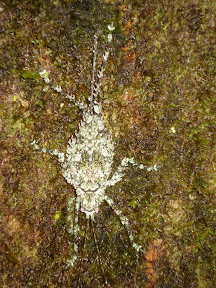
In a five hour bus ride, you can go from crisp mid-50s (Andean highlands) to muggy (the coast) or muggier (the rainforest) 85 degree weather. Over 1500 species of birds live here, drawing naturalists from all over. For instance, we met a woman in Mindo`s cloud forest doing a documentary on hummingbirds (colibrís) for PBS who told us how one drinks - not through suction (Aaron´s guess) but by unrolling its long tongue from its resting position, which is wrapped around the bird´s skull. We´ve seen more creepy crawlers of different sizes, colors and buzz-making abilities than Melissa would care to remember, and she was a bit startled by the hundreds of snails and crabs that slithered and scurried beneath our feet on the beach. All this in a country that`s roughly the size of Nevada.

Exotic as it is here, it´s not so much the creatures and landscapes that make us feel like foreigners as it is the culture, though it would be very wrong to suggest that there is only one culture. Indeed, the range of craftwork in Ecuador is awesome due to the range of indigenous groups that have managed to survive. Depending on what part of the country you are in, you might find hammocks woven from a single continuous piece of thread or jewelry made from seeds found in the rainforest or paintings on cornhusks using natural pigments. That said, it has been difficult to feel closer than arm´s length, closer than a spectator gawking at crafts, to locals that we meet.

Despite diligent study in a couple week-long language classes and extra-curricular attempts to increase our Spanish knowledge (particularly by Aaron), we remain far from fluent. And this language barrier coupled with what we`ve often heard described as a reserved nature among highlanders and aloof nature among coastal folks makes building relationships - in particular breaking through economic barriers - difficult. Aaron finds himself missing the sometimes overwhelming attention he received in Japan from curious locals eager to help. An Italian couple we met who own a (quite fabulous) restaraunt in the coastal fishing village of Puerto Lopez expressed similar sentiments - after 10 years, they have been unable to form any close friendships with native Ecuadorians.

The majority of the country`s indigenous and darker-skinned mestizos (people of mixed european and indigenous ancestry) appear to live in poverty. (According to our guidebook, 60 to 70% of Ecuador´s population lives below the poverty line.) In downtown Quito, shoeless five-year-olds roam the streets selling bubble gum with their mothers seemingly absent (though, as we soon observed, often inconspicuously waiting nearby). And in the midst of our hikes through the Andean countryside, virtually every child we saw asked for a gift of some sort - money or whatever else we had. Acts of kindness from adults were often abruptly followed by requests for money or patronage of their store, tour operation, etc. You can feel a bit like a slot machine, with people taking turns pulling your lever and hoping something will come out. Gringos are commonplace, and this ritual seems to be just a pragmatic part of life here.

We´ve been robbed twice, both times near Quito. The first time was on a bus to the nearby town of Otavalo. We thought keeping our bags at our feet was the safe way to go, but it wasn´t quite safe enough. Someone, we think a child, made a small slice in one of our bags, being very careful not to otherwise disturb it. Somewhat fortunately, all he got away with was several chargers and not the corresponding gear. And several weeks later Aaron was pick-pocketed in the midst of a New Year´s Eve crowd, losing a bit of cash.

This all makes it is easy to feel that your relationship with locals isn´t starting off on the right foot. When we do get past awkward beginnings, we often come up against one-word answers or the conversation somehow snakes its way back to suspciously economic territory. During our three-day stay in the rainforest with an indigenous community named Alukus, where we were already paying what on this trip is a large amount of money to live quite simply (to say the least), a number of our conversations with our guide emphasized how little he and his family have and ended in only slightly veiled requests for gifts in the future, purchases of his wife`s handcrafts, etc.

Even without conversation, some things are easily observed. We have noticed a refreshingly relaxed attitude in how locals interact with each other. While an unexpected bump on the subway in New York often results in rude looks or even a shouting match, an accidental elbow to the head practically goes unnoticed here. It takes a bit of getting used to the different notion of personal space, but it all seems part of a more "tranquilo," "que será será" attitude toward life.

On the coast, "tranquilo" doesn´t do the modus operandi justice. Melissa and I got very used to eating arroz mixto (rice and assorted seafood) and breaded fish because, well, that´s what every restaraunt sold (we were on hiatus from ceviche after some unfortunate stomach troubles). Forget about the enterprising attitude we`ve grown accustomed to where everyone`s trying to discover their own niche in the economic world, often the waitstaff/owners seemed mildly annoyed that a customer had just walked into their otherwise empty restaurant. Passion in this town was focused elsewhere, at least for the surfers. Watching them at sunset, when the waves got rowdy, was awesome. At least 20 of them would fill up a maybe a 40 meter stretch of breaks, making it look easy to share the waves while narrowly avoiding collision.

While in Quito, we visited a provocative and inspiring collection of work by Oswaldo Guayasamín entitled Capilla del Hombre (Chapel of Man). The exhibition begins in a grand, airy room with massive paintings and murals hanging on the walls - quite different from the claustrophobic, tightly packed assortment of work we are accustomed to in museums and galleries. Each work (at left: La Ternura) depicts human suffering, in one way or another. But the paintings aren´t just heart wrenching, they´re beautiful, reminding us of other artforms that draw on pain to create beauty, such as the Blues. Kinship was a theme in much of the work, and Melissa was struck by the familial tenderness represented in the paintings - a reminder of how important support is to overcoming adversity. We couldn´t remember being this inspired by an artist since seeing Gaudí´s work in Barcelona a few years ago.

Perhaps the exhibition was all the more moving since we observed it after being struck by Ecuador´s poverty. There is a great quote written in large letters on the wall of the second floor that translates to: "I cried because I had no shoes until I saw a child with no feet."

This idea of being happy with (and grateful for) what you have has come up a lot during our stay here. It seems reflected in the anti-"rat race" culture, and is perhaps most succinctly captured in a saying related to us by a guide at another Guayasamín museum: "You are not rich if you have more but if you need less."

We recently encountered this same idea when we were invited to an "oración" with our homestay family in Cuenca. The small, weekly family gathering involves prayer, giving thanks, seeking forgiveness, and reading and discussing scripture. That night, the chosen scripture led to a discussion of questioning one´s needs and taking the time to appreciate what you have now instead of ceaselessly striving to acquire more. (Once before, we observed a similar sort of gathering. We think it´s a worthwhile tradition, and one that does not necessarily need to be linked to religion.)

Yesterday was our last day with our Cuenca family. While we were there we were treated to the inside scoop on sights and events - a fútbol game between top university teams from Ecuador and Argentina, a trip to an orchideário that breeds over 1500 species, and an annual concert of four traditional South American groups. But, best was the opportunity to use our Spanish and befriend people in a country where we obviously have not had the easiest time getting to know locals. Among other things, our family educated us on Latin American music and rhythms. On our final evening, while we and our homestay parents sipped homemade canelazo, they treated us to quite a medley of live traditional songs complete with guitar acompaniment.

The family´s lifestyle, compared to others that we have mentioned in this post, was not that different from our own. Seemingly not unrelated is the fact that they look European, although they consider themselves mestizo. We have learned that mestizo is a category as broad, if not broader, than "black" in the United States.

It was instructive to get their take on racial prejudice in South America. In some ways it seems like race relations here are similar to those in the United States 50 years ago - advertisements and television programs only display white faces, it`s relatively unheard of to come across a mixed race couple and there are few, if any, indigenous or Afro-Ecuadorean people in positions of power. And while it has been reassuring to hear our host family and others voice their awareness of and disagreement with the racist attitudes here, it is disheartening to learn that they believe progress in addressing them is slow.

As you can hopefully see from our pictures (and there are more to come), Ecuador is a mind-blowingly rich and diverse nation. The high and low points, and the experiences that have made us feel most foreign, have broadened our perspectives and at times reminded us of how much wealth and comfort we have access to in the United States.

Bye for now...

xoM+A

Sunday, February 3, 2008

Happy New Year! (a little late, we know...) Hope it`s off to a great start for everyone.

Right now we`re in Guayaquil, Ecuador, the largest city and commercial center of the country. Finding ourselves in front of the nicest computers we`ve encountered thus far, we thought it`d be a good time to catch up on some photo sharing. So here goes...

Aaron`s family visited us in Buenos Aires for Thanksgiving. They were our first visitors on this marathon trip and it was great to have them with us for the holidays. One of the highlights was a last minute trip to Uruguay, for which we have Hut to thank. After the Boyds left, we headed south to the beach for a few days. Pics here: http://picasaweb.google.com/aaronboydyo/20071118123BuenosAiresUruguayAndMarDelPlata

In early December, we flew to Quito, Ecuador. Although we`ll devote at least one blog entry to our thoughts about being in Ecuador, for now let`s just say that life feels much more foreign here than it did in Argentina and Chile. Among other things, we`ve had our eyes opened a bit to some of the effects poverty can have on a country and its inhabitants. For the first few weeks of December, we were in Quito, where we took a Spanish class and did some sightseeing, with side trips to nearby Otavalo and Mindo. Pics here: http://picasaweb.google.com/aaronboydyo/20071241219QuitoOtavaloAndMindo

For Christmas, Melissa`s family paid us a visit. For a girl from NJ who stayed in state for college and moved to nearby NYC for law school and post-grad practice, it was quite nice to see the fam again after a whole 3 months! Pics here: http://picasaweb.google.com/aaronboydyo/200712201226Quito

Next we went south of Quito to hike the Quilotoa loop, which included journeying through small mountain towns inhabited mostly by indigenous folks and viewing the magnificent crater lake, Laguna Quilotoa. Pics here: http://picasaweb.google.com/aaronboydyo/200712271230ZumbahuaQuilotoaAndChugchilN

We returned to Quito for New Year`s. It was pretty raucous - amateur fireworks exploding in the streets, pickpocketers roving through the crowds (one of which stole Aaron`s wallet), and revelers out til all hours. We managed to have a damned good time (stolen wallet aside) and capture Aaron as no one has ever seen him before -you don`t wanna miss these photos... http://picasaweb.google.com/aaronboydyo/20072008123111Quito

That`s it for now - more soon. Take care of yourselves.

xoM+A

Monday, December 17, 2007

Hi everyone - it´s been a while but we´re back to share some more fun from our adventures. Hope you´re all happy, healthy and enjoying the holiday season! Now Aaron wants to relate one of his (and my) favorite stories from the trip thus far. Take it away, Red...

Back in early November, Melissa and I took on a hike that we were a bit under prepared for. After mistranslating "lots of snow at the top" as "lots of rain at the top", I began to realize my error about 3/4 of the way through our ascent. We were hiking up a small mountain in Parque Huerquehue in the lake district of Chile and, after slogging through lots of mud, we started seeing patches of snow. Patches turned into trail covered stretches, and Melissa was starting to get annoyed with either me or the unfavorable conditions, probably both. Our light hiking shoes were pretty wet. Finally, we turned a bend and saw our trail disappear into a snowy bank. As I turned to see the expression on Melissa´s face, I was cringing. Was this the end of the line?

"Oh. What?! No. No way. That´s it," with a shrug and defiant tone, "I´m done. I can´t do that."

Ahead of us, 15 feet or so, a woman stood at the base of the incline and lamented, shouting to three other members of her tour group that had already summited the worst of it.

It was looking grim.

"Hon, you can do this."

"No, Aaron, I cannot do this. And, I know that you saying I can do this really means you want to do this, and I don´t blame you for wanting to go up to the top of the hike, but, I´m telling you that I know what I can do--"

"But--"

"No, Aaron, I know what you are going to say, so just don´t," closed eyes, shaking head, "I - can - not - do - this."

At this point, the tour guide from the delayed group ahead of us had come back down to help out the last of his crew. He pulled on one end of a walking stick and the woman, clutching the other end, feebly followed. I considered telling Melissa that if this woman could do it, so could she. Just about then, the woman fell backwards and slid screaming, erasing her 10 feet of progress in dramatic fashion.

"Es imposible!" she yelled, from her prone and inverted position.

Melissa was not looking happy - this clearly wasn´t the sort of encouragement she needed. Thanks a lot, Mr. Tour Guide. I wanted to see for myself how hard this was. I headed for the most trodden part of the embankment and followed the well stomped steps. It was steep, but in about 30 seconds, I was near the top.

I came back down. I waited a bit. And then, Melissa agreed to try it! I was very proud of her.

We began our climb - her in front, me behind providing artificial support, going one careful step at a time and never looking down.

Pictures will do a better job describing what we saw at the top but let´s just say it was more than worth it. You can find photos of our hike, and the summit, in this photo collection:
http://picasaweb.google.com/aaronboydyo/2007112118AroundPucNAndCollipulli

As for how we would get back down (on Melissa´s mind as soon as we got to the top) it was easiest to just slide on our jackets. Video of Melissa here (her first sledding experience):
http://video.google.es/videoplay?docid=-4184233498197143378&hl=es

A week or so later, we were in Valdivia, Chile, a pretty university town south of Pucon. And then came Bariloche, Argentina - wow! - views that really live up to expectations. We took many photos, and some video:
(pics) http://picasaweb.google.com/aaronboydyo/20071191115ValdiviaAndBariloche
(video) http://video.google.es/videoplay?docid=-351576861924611022&hl=es

We´ve got some more pics and stories to share from our fantastic T-giving with the Boyds + Hut, hanging on the beach in Argentina and our first couple weeks in Ecuador so stay tuned...

xoM+A

Saturday, November 17, 2007

We`re elated to be getting caught up on posting our photos, as we sit in a café in the most boring city we have yet to visit, Bahia Blanca, Argentina. It´s not really Bahia´s fault, since Bahia is more a travel hub than a destination.

"Stop twirling the ring, Aaron."
"Ok."

Anyhoo, the first photojournal (Aaron informs me that is the proper nomenclature) we`re forwarding is from Mendoza, Argentina, a.k.a. Heaven on Earth. Ok, there were some downsides, like the half-naked party girls sent around to raise support for various election candidates, but how bad could any place get where you`re practically guarantied sunshine and 80 degrees as you stroll down the wide, tree-lined sidewalks on your way to a beautiful park?? Photos here: http://picasaweb.google.com/aaronboydyo/200710181025MendozaAndTheAndes

Melissa accomplished a MOST amazing feat while we were in Mendoza. You´ll have to watch the video to find out. (the first minute is a little slow, but the conclusion is not to be missed... sound recommended) http://video.google.com/videoplay?docid=-4635136088480542563&q=melissa+bike&total=62&start=0&num=10&so=0&type=search&plindex=2

As you`ve probably just seen, we snapped just a few photos on our drive through the Andes into Chile - it was 75 to be exact, be happy we cut liberally.

Valparaíso was our first stop in Chile. We really liked the vibe and bohemian style in Cerro Alegre. Melissa got an infection that earned her the nickname "puffy." See our second photo journal for a visual. http://picasaweb.google.com/aaronboydyo/200710251031ValparaSoAndCollipulli

From Valpo we headed south to Collipulli and had the pleasure of staying with Connie Landinez´s in-laws. They fed us VERY well, directed us to beautiful nearby locations (pics coming soon), gave us great opportunities to practice our Spanish and, most importantly, truly made us feel like family. We`re hoping to return the favor someday in Bend, OR.

We´re off to dinner before we catch our night bus to Buenos Aires for a T-giving reunion with the Boyds! Happy holiday and talk again soon.

xoM+A